
At the "Etihad Museum": ILLAFTrain UAE & Dubai Media Crown "Institutional Change Leadership" Projects with the Golden Imprint
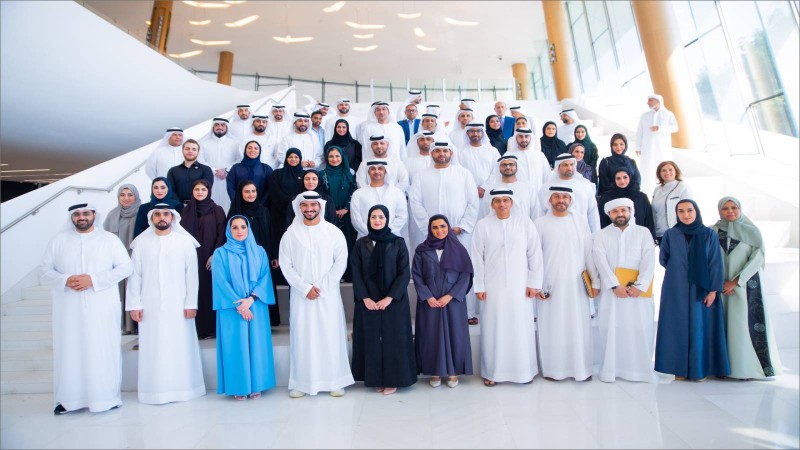
| Group photo at the closing ceremony |
Dubai, United Arab Emirates - 2024-09-11
Some programs end with certificates. Others end with ideas powerful enough to reshape institutions.
That was the atmosphere surrounding the final phase and graduation ceremony of the “Institutional Change Leadership According to the MIT Methodology” course, organized by ILLAFTrain UAE in partnership with Dubai Media.
Hosted at the iconic Etihad Museum from September 9 through September 11, 2024, the course brought together an influential gathering of executive leaders, professionals, and experts from a wide range of sectors.
Across three intensive days, the venue became a hub for strategic dialogue, collaborative thinking, and future-focused leadership conversations centered around one critical question: how do institutions evolve without losing momentum, identity, or people along the way?
The answer unfolded through a program designed not simply to discuss change, but to prepare leaders capable of driving it from the front seat rather than reacting from the rearview mirror.
Course Trainers
“Trust your vision enough to build it before others can see it.”
With that mindset setting the tone, trainers Hussin Habib Al-Sayed and Faisal Bin Huraiz delivered a highly engaging learning experience that blended leadership development, strategic thinking, and practical execution.
The program attracted an accomplished group of entrepreneurs, executives, and managers seeking more than theoretical frameworks.
Participants were looking for tools they could immediately bring back to their organizations: strategies for navigating resistance, leading transformation initiatives, and building cultures capable of adapting to fast-moving environments.
Throughout the sessions, the trainers created an atmosphere that encouraged participants to challenge assumptions, exchange ideas openly, and approach institutional change with both confidence and creativity.
The experience felt less like a traditional training course and more like a leadership think tank where strategy met action in real time.
Training Material
“Pages that combined models, processes, and plans for institutional change management.”
The program content was designed as a comprehensive roadmap for understanding and leading organizational transformation from multiple angles.
Using a balanced mix of theory, case-based learning, and practical application, the trainers explored internationally recognized change management models and demonstrated how these frameworks can be adapted to different institutional environments and leadership contexts.
Interactive workshops and collaborative exercises allowed participants to test ideas, solve realistic organizational challenges, and transform abstract concepts into actionable leadership practices
These materials included twelve strategic units within the course:
- Core Concepts of Change Leadership.
- Levels of Change.
- Areas and Forces of Change in Institutions.
- The Ability to Manage Change in Institutions.
- Innovative Practices for Leading Change in Institutions.
- The Most Important Change Methodologies in Institutions.
- Why Do Change Efforts Fail in Institutions?
- The Most Common Mistakes Leaders Make During the Change Process.
- The Main Features of Resistance to Change in Institutions.
- John Kotter’s Model for Institutional Change.
- The Characteristics and Competencies of Change Leaders.
- Institutional Change Triads (3x3).
Course Atmosphere and Graduation Ceremony
“Be the leader who inspires others with a clear vision and leads them toward achieving goals with confidence and creativity.”
As the course moved into its graduation phase, the energy inside the venue shifted from learning to presentation and evaluation.
Participants showcased their final institutional change projects before a panel of directors and senior leaders, presenting their ideas alongside their teams in a professional environment that reflected both ambition and preparation.
Every project demonstrated thoughtful planning, strategic depth, and a clear commitment to solving real organizational challenges.
What followed became one of the defining moments of the event.
After reviewing all the presented projects, the directors announced that every team had achieved the “Golden Imprint,” emphasizing that no single project outperformed the others.
The decision reflected the exceptional quality, innovation, and professionalism demonstrated across all submissions.
Even more significantly, the directors confirmed their intention to study the submitted projects further and explore opportunities for future investment and implementation, turning training room concepts into potential institutional realities.
Finally…
The closing ceremony carried the kind of emotion usually reserved for milestone moments: pride in what had been accomplished and excitement for what comes next.
Participants received certificates recognizing their successful completion of the program through active engagement, collaboration, and project development.
In addition, ILLAFTrain UAE presented commemorative shields to honor the participants’ dedication and achievement throughout the journey.
The final moments unfolded in a celebratory atmosphere filled with optimism, conversation, and shared ambition.
Cameras captured smiles, handshakes, and memories, but beneath those moments lay something deeper: the feeling that the program had not simply trained leaders to manage change but had equipped them to become the driving force behind it.